
Contact Lenses
As a local, independent group of opticians DW Roberts are free to recommend lenses from all suppliers enabling us to find the most suitable lens for you.
Millions of people around the world enjoy the freedom of wearing contact lenses. They are an ideal option for those who lead an active lifestyle or for those who do not like the idea of wearing glasses all the time.
Specialist contact lenses and Ortho-K overnight lenses are also effective ways to manage the progression of myopia (short-sightedness) in younger children. These are explained in the Myopia Management section below.
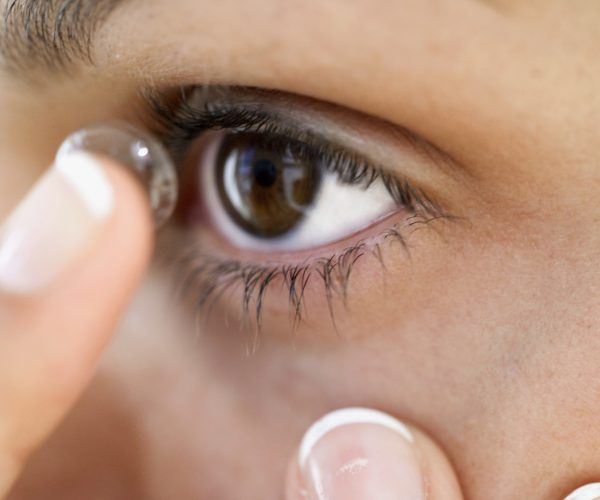
Full Contact Lens Starter Trial – £60
(£75 for multifocal and gas permeable lenses)
Would you like to experience the freedom of wearing contact lenses? Come and talk to us about our complete contact lens trial.
After an initial consultation to determine the best contact lenses to suit your lifestyle, we will fit you with trial lenses so you can see how they feel. If, at this point, you choose not to proceed further, you will not be charged for the trial.
Included in the trial:
- An initial appointment where the optometrist will discuss your lifestyle and requirements, and then match you with the best contact lenses for your unique needs. You will need an up-to-date prescription, for this appointment, that is no more than 12 months old.
- Trial Contact Lens Fitting for you to experience the feel of contact lenses in your eyes and try them out for a short time. If, at this point, you decide not to proceed any further, the cost of the contact lens trial will be waived.
- Lens fitting – this involves detailed measurements and specifications of the lenses.
- Application & Removal tuition (this can frequently take more than one appointment).
- Training on how to care for your lenses and eyes.
- Once you and your optometrist are both happy you will be given some trial lenses to take away:
- 10 – 30 days’ supply depending on the type of contact lenses chosen
- Follow-up appointment after one week to check that you are happy with your lenses.
At this point you can join our Monthly Contact Care Plan.
Monthly Contact Care Plan
Let us take care of ordering and maintaining your supply of contact lenses (and solutions if applicable) ready for you to collect at regular intervals. Please note that your sight test and contact lens aftercare appointments must be kept up-to-date to ensure continuity of supply of your lenses.
The plan costs £7 per month, plus the cost of your lenses, paid by easy monthly direct debit.
A deposit equivalent to 3 months payment is required at the time of initial set up.
Benefits of joining the Contact Care Plan:
- Save up to 50% of the cost of your contact lenses
- Free contact lens aftercare appointments (saving £60 per aftercare)
- Free emergency contact lens appointments
- 25% discount on your spectacles
Please call your local DW Robert’s practice to make your appointment:
Bletchley – 01908 373131
Newport Pagnell – 01908 218121
Stony Stratford – 01908 562355
Towcester – 01327 350240
Wolverton – 01908 313338
Direct Debit Mandate
https://osu.landz.co.uk/OSU.Web/OSU.aspx?u=f7045851-2859-4e21-96f4-5d9161fa84dc
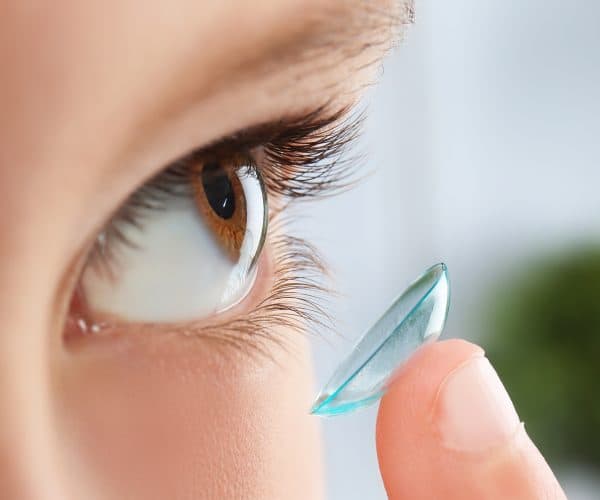
Contact Lens Aftercare
You should have regular contact lens aftercare appointments and sight tests to check the health of your eyes and to ensure that you have the best experience with your lenses.
When you attend an aftercare appointment you should be wearing your contact lenses and should have done so for at least two hours. The optician will check the health of the front of your eyes, make sure that you are cleaning and disinfecting or discarding your lenses correctly and check your contact lens prescription to ensure that your current lenses are still the best lenses for you.
Myopia Management
What is myopia?
Every parent should be aware of the signs of myopia (short-sightedness) developing in their child.
Myopia is usually easy to correct with glasses or contact lenses. However, when it occurs in young children it is very concerning as it can progress rapidly and continue to worsen until adulthood.
How do I spot the symptoms?
You may notice one or more of these signs in your child:
- needing to sit nearer the front of the class at school
- sitting closer to the television
- experiencing headaches after watching TV or other distance tasks
- holding books and devices very close
- blinking excessively or squinting
- rubbing their eyes frequently
- complaining of headaches and tired eyes
How might myopia affect my child’s eyesight in the future?
Unfortunately, a childhood diagnosis of myopia means life-long eye care and, in general, the younger the child when their myopia starts, the faster their vision will worsen and the more myopic they will become as an adult.
Adults with high levels of myopia need stronger, thicker lenses and are at increased risk of developing sight threatening conditions such as retinal detachment and myopic maculopathy.
To check your child’s risk factors click on the button below:
What treatment is available?
Whilst there is no cure for Myopia, there is a solution. Whilst existing myopia cannot be reversed, its progression can potentially be slowed down and, in some cases, halted by employing one of the Myopia Management contact lens treatment options below.
- Specialist soft contact lenses
These daily contact lenses are specially designed to correct existing myopia, giving clear distance and near vision, and they are also proven to slow, and even sometimes halt, the progression of myopia in children.
- Orthokeratology (Ortho-k)
Ortho-k custom made contact lenses correct your vision while you sleep giving clear, natural vision throughout the day for both adults and children. Ortho-k lenses have also been proven to slow the progression of myopia in children by 40 – 50%.5
Please contact your nearest DW Roberts’ branch for further information about our Myopia Management options.
The link below explains what EyeDream Ortho-k is and how it works.
https://eyedreamlenses.com/what-is-eyedream/
References
- Morgan, P. Is Myopia Control the Next Contact Lens Revolution? The Optician 2016.
- The College of Optometrists. Article 20.1.16 – [NICER] Study shows myopia prevalence in children in the UK has more than doubled in the last 50 years.
- Tse DY, Lam SC, Guggenheim JA, Lam C, Li KK, Liu Q, To CH. Simultaneous defoucs Integration during g refractice development.
- Paul Chamberlain et al. A 3-year Randomized Clinical Trial of MiSight Lenses for Myopia Control. Optom Vis Sci 2019;96:556–567
- The College of Optometrists. Guidance for Optometrists – Myopia Management, February 2019.
We also offer another option for managing myopia in the form of specialist spectacle lenses:
- Miyosmart spectacle lenses
Miyosmart is the latest technology, and the simplest solution, for correcting your child’s vision whilst significantly slowing the progression of their myopia, by an average of 60%3 at the same time.
Miyosmart lenses are non-invasive and worn like normal glasses. Ideal for even the most active child, they are made of lightweight impact-resistant polycarbonate with built in UV protection and anti-reflective, water repellent coating.

Important information
The results of myopia management intervention vary for each child and are not guaranteed. It is difficult to accurately measure the improvement as it is not known how myopic your child would have become without myopia management.
The treatments are safe and are currently some of the best available options for slowing the progression of myopia.
Myopia management treatment needs to continue until your child’s eyes have stopped growing.
Monthly Contact Care Plan
Let us take care of ordering and maintaining your supply of contact lenses (and solutions if applicable) ready for you to collect at regular intervals. Please note that your sight test and contact lens aftercare appointments must be kept up-to-date to ensure continuity of supply of your lenses.
The plan costs £7 per month, plus the cost of your lenses, paid by easy monthly direct debit.
A deposit equivalent to 3 months payment is required at the time of initial set up.
Benefits of joining the Contact Care Plan:
- Save up to 50% of the cost of your contact lenses
- Free contact lens aftercare appointments (saving £60 per aftercare)
- Free emergency contact lens appointments
- 25% discount on your spectacles
Please call your local DW Robert’s practice to find our more:
Bletchley – 01908 373131
Newport Pagnell – 01908 218121
Stony Stratford – 01908 562355
Towcester – 01327 350240
Wolverton – 01908 313338
Direct Debit Mandate
https://osu.landz.co.uk/OSU.Web/OSU.aspx?u=f7045851-2859-4e21-96f4-5d9161fa84dc

Frequently Asked Questions
We've compiled a list of frequently asked questions to ensure your experience with DW Roberts is as straight forward as possible.
Have a question that isn't answered here? Please get in touch with us and we'll be happy to help.
Will I be suitable for contact lenses?
+Can I have a free contact lens trial?
+I have astigmatism, can I wear contact lenses?
+Do I still need glasses if I wear contact lenses?
+Do I still need a sight test if I have been for a contact lens check-up?
+